
If you've ever chosen cannabis based on a strain name alone, you're not alone. For years, terms like "indica," "sativa," and "hybrid" have shaped how patients navigate cannabis. Those categories can be helpful, but they don't always tell the full story — especially in a market as nuanced and craft-driven as Maine. If you've browsed our menu, you may have already seen terpene profiles listed alongside THC and CBD. That's where your understanding starts to evolve.
What are terpenes?
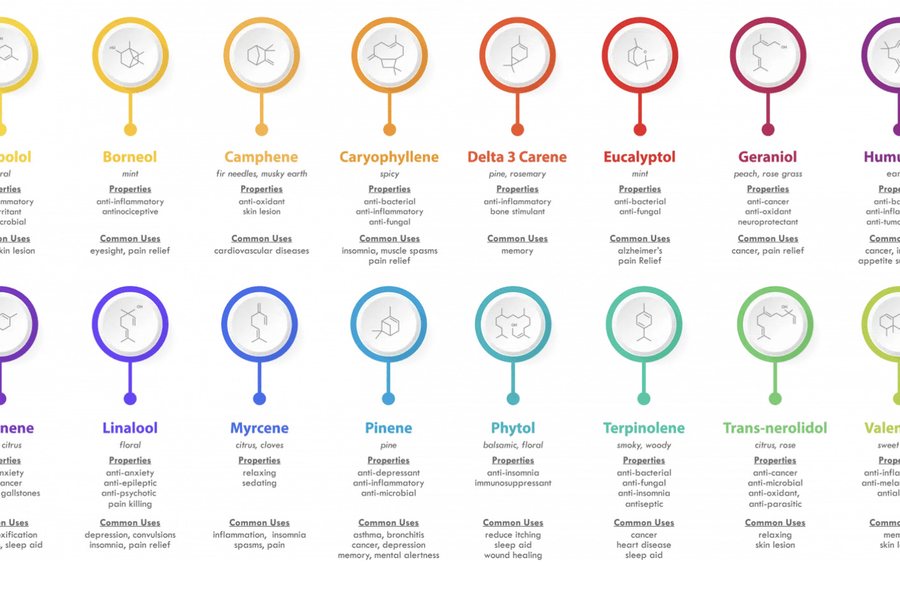
Terpenes are naturally occurring aromatic compounds found in many plants — not just cannabis. They're what give citrus its brightness, lavender its softness, and pine its grounding scent. In cannabis, terpenes don't just influence how something smells or tastes — they help shape how it feels. Two high-THC products, like a Gelato flower and a Super Lemon Haze vape, may test similarly in potency but feel completely different thanks to their terpene profiles.
Why this matters for medical patients
Instead of asking "what's the strongest product?", you can begin asking "what profile supports how I want to feel?" As you browse, you might notice patterns commonly described as:
- Myrcene-rich strains (often Granddaddy Purple or GMO) — commonly associated with deeper rest and body relaxation
- Limonene-forward profiles (think Lemon Tree or Super Lemon Haze) — often described as brighter and more uplifting
- Pinene-dominant options (like Jack Herer) — can feel clearer and more focused
Moving beyond strain names
Strain names can vary from grower to grower — and even batch to batch. One cultivator's Wedding Cake might feel slightly different from another's. But the terpene profile behind it is where consistency lives. If you enjoy something like Runtz or Gelato for its balanced, slightly sweet and calming character, you can start looking for similar terpene combinations across other products — even when the name is different.
Let your senses guide you
One of the simplest ways to start working with terpenes is to trust your senses. Notice what a product smells like, and how those aromas track with how it tends to feel. Over time you'll build your own map. This is general education, not medical advice — everyone responds differently.